


Walk into any wedding season and you’ll hear the two words used as if they mean the same thing. A cousin says he’s getting a bandhgala. The tailor calls it a Jodhpuri. The online listing says “Jodhpuri bandhgala,” and now you’re wondering whether there’s a difference at all or whether it’s just two names for one garment.
Short version: they’re closely related, and in everyday shopping the terms overlap heavily, but they’re not strictly identical. Below, we’ll untangle the history, the actual design differences, and how to choose between them for a wedding, a sangeet, or a groom’s look.
Are Bandhgala and Jodhpuri Suits the Same?
Technically, a Jodhpuri suit is a type of bandhgala. Think of bandhgala as the broad category (a jacket with a closed, stand-up collar) and Jodhpuri as a specific, more traditional expression of that idea, tied to Jodhpur in Rajasthan.
In practice, here’s what you’ll find in the market:
- Many people use the two terms interchangeably.
- Some designers use “Jodhpuri” for a structured, classic, often three-piece version, and “bandhgala” for a more modern, flexible jacket.
- A few brands, including ours, use both names together (“Jodhpuri bandhgala”) because customers search for both.
So if you’re asking “is bandhgala same as Jodhpuri?”, the honest answer is: almost, but the difference is worth knowing. It shows up in cut, formality, and how the outfit is put together.
What Is a Bandhgala?
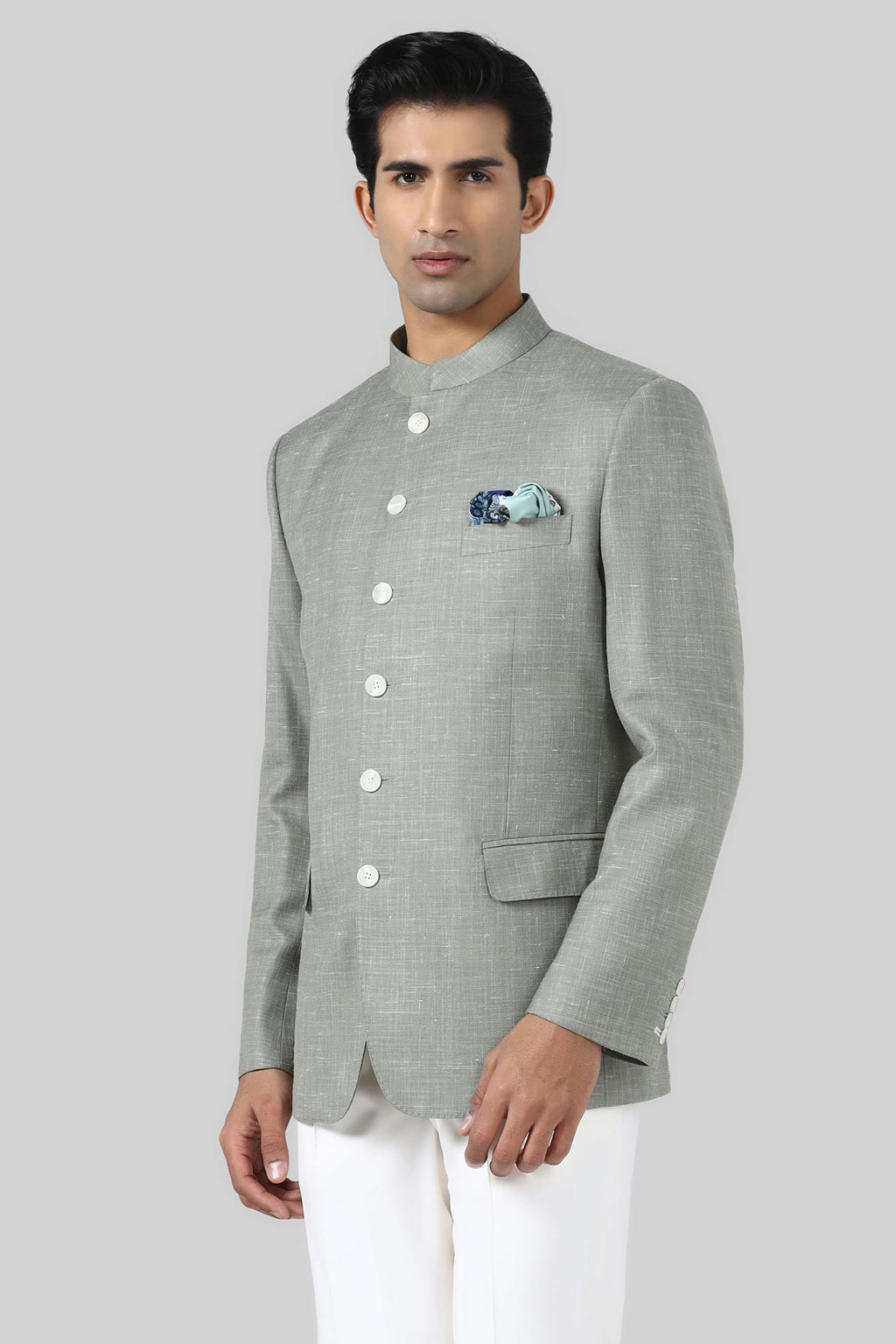
“Bandhgala” literally means “closed neck.” It’s a tailored jacket with a stand collar that sits close to the throat, buttoned down the front, and designed to be worn as a full-sleeved coat.
What makes it popular today is its versatility. A bandhgala can be:
- Worn as a formal bandhgala suit with matching trousers
- Paired with contrasting trousers for a more Indo-western look
- Styled over a plain shirt or a fine knit
- Made in fabrics ranging from structured wool to textured silk and velvet
Our bandhgala suits and bandhgala suits for men show how wide that range is, from a restrained black piece for a reception to something richer for a sangeet.
What Is a Jodhpuri Suit?
The Jodhpuri suit takes its name from Jodhpur, and its origins are commonly traced to the royal courts of the region in the late 19th century, popularised under Jodhpur’s royal patronage. It’s often described as an Indian adaptation of the Western coat, blending the tailored structure of a European suit with the closed collar of Indian formalwear.
A traditional Jodhpuri suit generally features:
- A closed, high collar
- A neatly fitted, structured coat, often with a clean line of front buttons
- Matching trousers
- Frequently a waistcoat, making it a three-piece outfit
It carries a slightly more formal, heritage feel than a typical modern bandhgala. If you want something with a royal air, look at our Jodhpuri suits and our Jodhpuri suit for wedding edit.
Jodhpuri Suit With Trousers vs Breeches (Jodhpurs)
This is a common source of confusion, so it’s worth clearing up. Jodhpurs are a style of riding breeches, fitted through the thigh and ankle-length, which also came out of Jodhpur’s riding and polo culture. They share a place of origin with the Jodhpuri coat but are a different garment entirely.
A modern Jodhpuri suit is worn with regular tailored trousers, not breeches. The trousers are typically straight or slightly tapered, matched to the coat in colour and fabric. So when someone asks about “Jodhpuri suit with trousers vs breeches,” the answer is that the suit is almost always worn with trousers today. The breeches belong to riding wear and are seldom seen at weddings.
Bandhgala vs Jodhpuri: The Key Differences
Here’s a side-by-side look. Keep in mind these are general tendencies, not strict rules, since designers vary.
| Feature | Bandhgala | Jodhpuri Suit |
|---|---|---|
| Meaning | Broad category: any closed-collar jacket | A specific style linked to Jodhpur |
| Structure | Ranges from sharp to relaxed | Typically more structured and traditional |
| Outfit format | Jacket alone, two-piece, or three-piece | Often a full suit, sometimes with waistcoat |
| Formality | Flexible, formal or contemporary | Generally more formal and heritage-leaning |
| Styling | Easier to dress up or down | More classic, less casual |
| Common use | Weddings, receptions, Indo-western events | Weddings, formal ceremonies, traditional occasions |
If you’re after the most flexible option, a bandhgala wins. If you want something classic and ceremonial, a Jodhpuri has the edge.
Bandhgala vs Nehru Jacket: Not the Same Either
People often lump these together too. A Nehru jacket is usually a lighter, hip-length layer, often sleeveless, worn over a kurta. A bandhgala is a full-sleeved, tailored coat that works as the main garment.
Think of it this way: the Nehru jacket is a layer, and the bandhgala is the outfit. Our Nehru jacket sets and Nehru jackets suit relaxed ceremonies like haldi and mehendi, while a bandhgala suits the evening events.
Bandhgala vs Sherwani: Which Is More Formal?
A sherwani is generally longer, often knee-length or more, and typically carries heavier embellishment, worn with churidar or fitted trousers. It’s the traditional choice for the wedding ceremony itself.
A bandhgala is shorter, cleaner, and more versatile. Many grooms now choose a bandhgala for their reception or cocktail evening and keep the sherwani for the pheras. If you’re weighing your options, browse our sherwani collection and sherwani for groom alongside the bandhgala, and consider wearing both across the celebrations.
Which Is Better for a Wedding: Bandhgala or Jodhpuri?
It depends on your role, your venue, and how traditional the families are.
Choose a Jodhpuri suit if:
- The wedding is formal and traditional
- You like the heritage look and the three-piece format
- You want something that feels ceremonial without being as heavy as a sherwani
Choose a bandhgala if:
- You want something adaptable across multiple events
- You’d like to wear it again after the wedding
- The celebration is modern, destination-style, or Indo-western in spirit
For wedding-specific options, see our bandhgala suit for wedding and wedding bandhgala suit pieces.
Can You Wear a Bandhgala as a Groom?
Absolutely, and it’s increasingly common. A bandhgala suit for groom works especially well for the reception, engagement, or a cocktail night, and some grooms wear it for the wedding itself, particularly in smaller or more contemporary ceremonies. Our bandhgala suit for groom collection is a good starting point.
If you’re planning to wear a bandhgala for the main ceremony, a richer fabric, subtle embroidery, or an ivory, champagne, or deep jewel tone will help it feel appropriately celebratory.
What Do You Wear Under a Bandhgala?
This is the most-asked styling question, and the answer is simple: keep the neckline clean.
- A fitted shirt with a low or hidden collar. A regular, tall collar will poke out and spoil the line.
- A collarless or mandarin-collar shirt. This is the cleanest option and sits flat under the stand collar.
- A fine knit or plain round-neck tee. Works for a more relaxed, Indo-western look.
- A waistcoat (for Jodhpuri-style three-piece looks). Adds structure and the traditional feel.
Avoid heavy, patterned, or bulky shirts under a closed-collar jacket. The point of a bandhgala is the clean, uninterrupted neckline. Our shirts collection has pieces that work under a closed-collar jacket.
How Should a Bandhgala Fit?
Fit is where a good bandhgala and an average one part ways. Because the collar is closed and the structure is prominent, there’s less room to hide a poor cut.
A well-fitted bandhgala should have:
- Shoulders that sit flush with your natural shoulder line, with no sagging or pinching.
- A collar that sits comfortably against the neck without gaping or digging in.
- Sleeves that end around the wrist bone, showing a little shirt cuff if you’re wearing one.
- A jacket length that covers the seat, giving a balanced silhouette.
- A front that closes smoothly without pulling across the chest or stomach.
- Trousers with a clean, minimal break at the shoe.
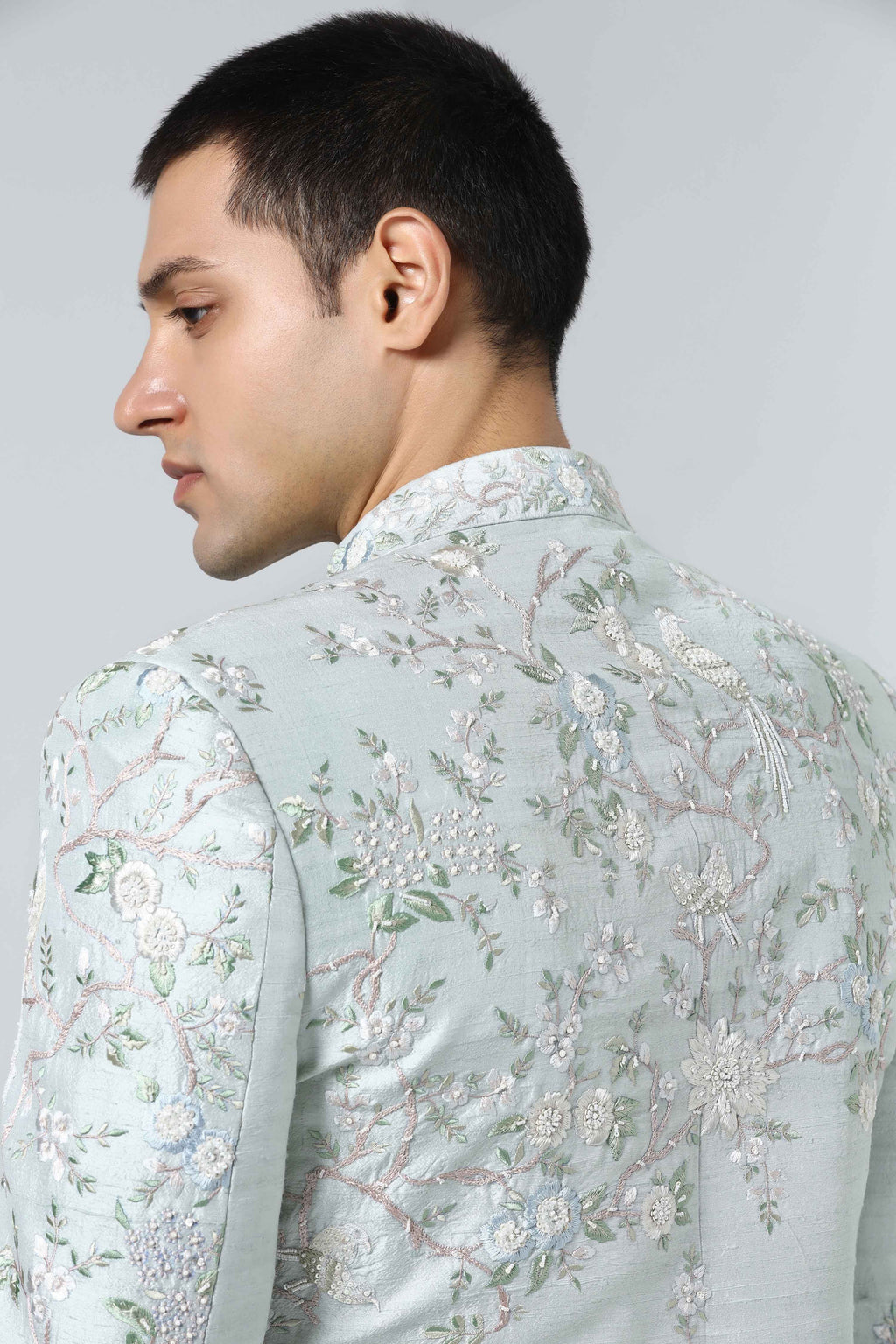
This is why tailored and made-to-measure options tend to outperform off-the-rack. Ready-made pieces can look good, but a bandhgala is a garment that rewards a precise fit.
Which Suits a Slim Build, and Which Suits a Heavier Build?
For a slim build: Textured fabrics, a structured shoulder, and a closer cut add presence. Avoid a jacket that’s too long, which can swallow your frame.
For a heavier build: Solid, darker colours, clean lines, and a fit that skims rather than clings are your friends. Keep embellishment away from the midsection, choose a slightly longer jacket length, and avoid anything cut too tight through the chest.
In both cases, a skilled tailor can adjust the proportions to flatter you, so don’t rule out a style until you’ve tried it on.
Colour Choices: Why Black Bandhgala Suits Remain a Favourite
A black bandhgala suit for men is the safest and most versatile choice. It’s evening-appropriate, flattering across skin tones, and easy to dress up or down. It also takes well to texture, such as a self-pattern, subtle embroidery, or a velvet finish.
If black feels too sombre for a wedding, other reliable colours include deep navy, charcoal, wine, bottle green, ivory, and champagne. For after-dark events, our after-dark edit shows how deeper tones come into their own.
Bandhgala and the Indo-Western Wardrobe
Much of the bandhgala’s popularity comes from its place in Indo-western clothes for men. It bridges the gap between a traditional kurta and a Western suit, which is why the Indo-western man reaches for it so often. You can wear it with:
- Matching formal trousers for a polished look
- Slim chinos or tailored trousers for a relaxed evening
- Dark denim for a more casual take (with a lighter, less structured jacket)
Browse our Indo-western collection, Indo-western suits for men, and designer suits to see how these pieces work together. Finish the look with the right shoes and accessories.
Choosing a Brand: What to Look For in Indian Menswear
If you’re researching Indian menswear brands and comparing menswear brands in India, a few markers separate the good from the merely fashionable:
- Fabric quality. Ask what the fabric is and where it’s from.
- Construction. Look at the collar, lining, and buttons, which are details that show craftsmanship.
- Fitting options. Can they alter the piece, or offer made-to-measure?
- Experience. How long has the label been making formal and ceremonial menswear?
- Access to a physical store. Fit is hard to judge online.
Brahaan has been tailoring menswear since 2001, founded by Sanjeev Mehra and now led by his sons Akul and Shubh Mehra. Our stores in South Ex-2, Rajouri Garden, Gurgaon and Mumbai let you try the pieces on, and our tailored suits show the same attention to fit across formal wear.
Frequently Asked Questions
1. Are bandhgala and Jodhpuri suits the same?
Not exactly. A Jodhpuri suit is a specific, more traditional style of bandhgala associated with Jodhpur. In everyday use the terms overlap, and many sellers use them interchangeably.
2. What is the difference between a bandhgala and a Jodhpuri suit?
Bandhgala is the broader category of closed-collar jackets, while a Jodhpuri suit is typically a more structured, formal, often three-piece version rooted in Jodhpur’s royal tailoring. Bandhgalas tend to be more flexible in style and styling.
3. Which is better for a wedding, bandhgala or Jodhpuri?
Both work. A Jodhpuri suit suits traditional, formal ceremonies, while a bandhgala offers more flexibility and is easier to re-wear. Many grooms choose a bandhgala for the reception and a sherwani for the main ceremony.
4. Can I wear a bandhgala as a groom?
Yes. It’s a popular choice for grooms, especially for receptions, engagements, and contemporary weddings. A richer fabric or subtle embroidery makes it feel appropriately celebratory.
5. Is a Jodhpuri suit formal?
Yes. A Jodhpuri suit is generally considered formal and is well-suited to weddings, receptions, and ceremonial events.
6. What do you wear under a bandhgala?
A fitted shirt with a low or hidden collar, a collarless or mandarin-collar shirt, or a fine knit. Keep the neckline clean so the stand collar sits properly.
7. Which one suits a slim or heavier build?
Both can work for any build with the right tailoring. Slim builds benefit from texture and structure, while heavier builds do well with darker solids, clean lines, and a skimming (not tight) fit.
8. How should a bandhgala fit?
The shoulders should sit flush, the collar should rest comfortably against your neck, the sleeves should end near the wrist, and the front should close without pulling. A tailored fit makes a significant difference.
9. What is the best bandhgala for Indian weddings?
It depends on the function. A black or deep-toned bandhgala suits reception evenings, while ivory, champagne, or richer embroidered pieces suit daytime and ceremonial occasions. Browse our wedding bandhgala collection for ideas.
10. Where can I get a custom bandhgala in Delhi?
Brahaan offers tailored and made-to-measure menswear at our South Ex-2 and Rajouri Garden stores in Delhi, as well as Gurgaon and Mumbai. Visit a store for measurements and fabric selection, or start by exploring our bandhgala suits for men.
